
Listening in transit
The dance floor and the moving car
Car stereos, urban distance and the changing scale of the soundscape.
Imagine a record playing through the car stereo on an open Detroit freeway. The low end joins the engine. A regular drum pattern meets the lane markings as they disappear beneath the windshield. The music begins to organize an encounter with the city, giving the journey a horizon.
The car is an intimate consequence of Detroit’s industrial history. It creates a private listening space that moves through a collectively built landscape. Decisions made at a synthesizer in a small room can become a way of sensing the metropolitan world.
Richard Pope’s attention to the everyday experience of Detroit offers a starting point for this listening scene. The freeway extends the question into movement: how does the city change what a repeated sound allows us to feel?
The disappearance of the crowd changes the force of an echo. A delayed chord may sound like an attempt to locate somebody across a distance. A loop can acquire the duration of a journey whose destination has ceased to matter. The listener becomes increasingly aware of what hangs around the beat.
Some records concentrate on the immediate demands of a DJ set. Others sustain an environment that rewards a longer, more solitary encounter. Cruising and dancing reveal different capacities within the music, and a single track may move convincingly between both.
LISTEN ALONGSIDE THIS ENTRY
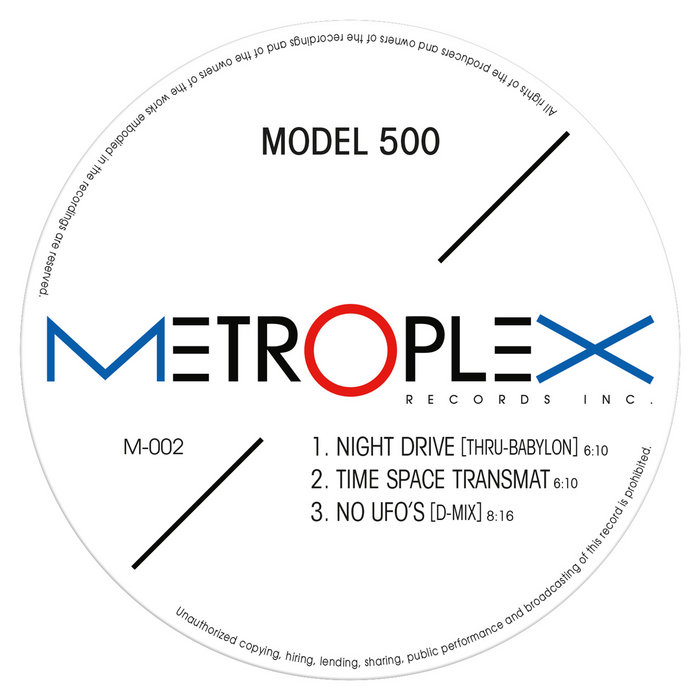
Night Drive (Thru-Babylon)Model 500Listen here
Audio loads when requested.
Official remastered edition of the 1985 Metroplex release.
The Album Formerly Known As....Carl CraigListen here
Audio loads when requested.
Carl Craig’s 2005 reworking of Landcruising (1995), presented here in the official artist-hosted edition.